Crypto
How to Tell If a Fintech App Is Actually Trustworthy
Sep 11, 2026
•
3 mins read
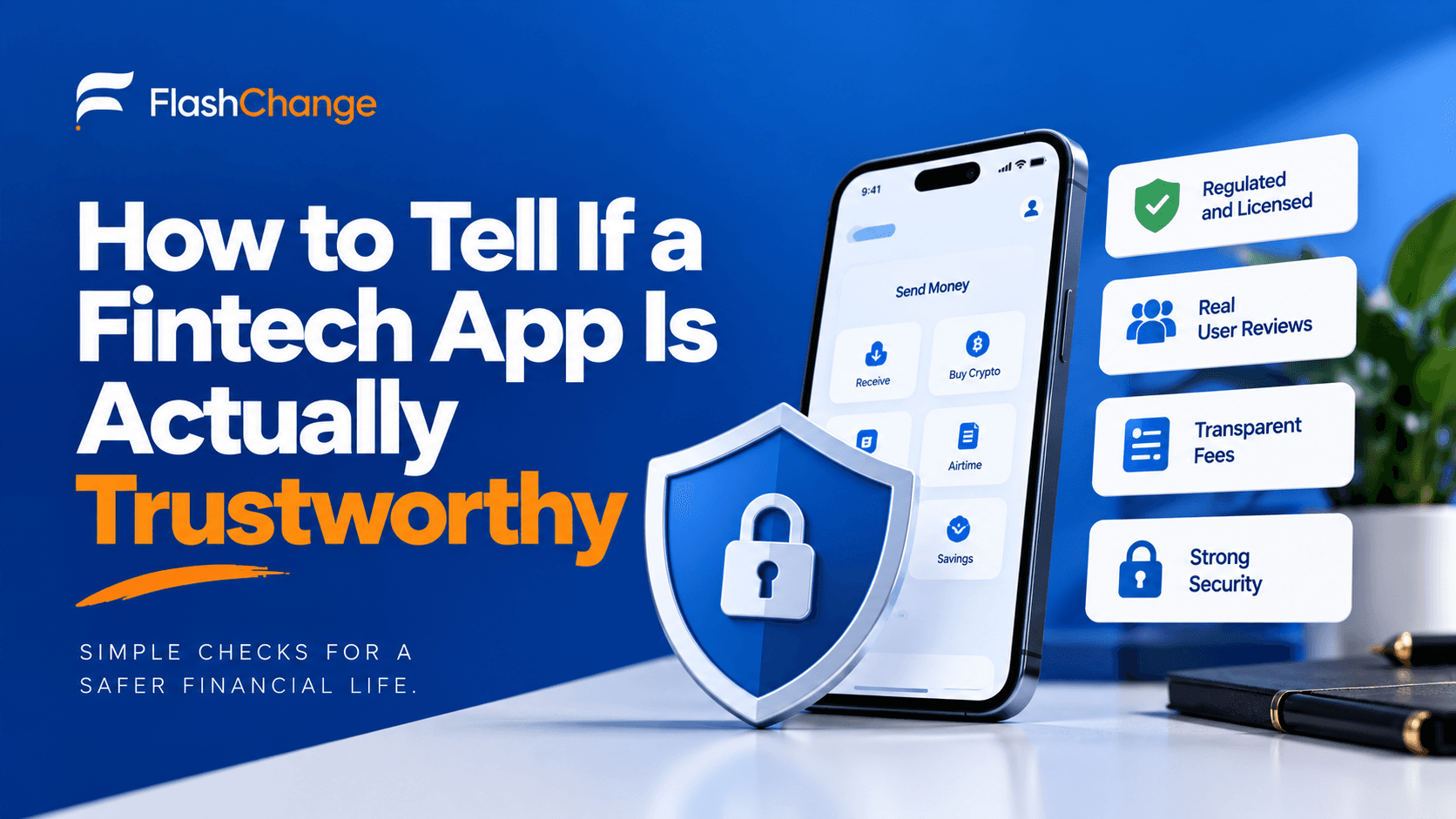
Nigeria's fintech scene is crowded. New apps launch constantly, backed by ad campaigns, referral bonuses, and social media buzz that makes them feel unavoidable.
None of that tells you whether an app is actually safe to trust with your money.
Popularity and trustworthiness are different things, and confusing them is exactly how people end up burned by apps that looked completely fine right up until they weren't.
This isn't a lecture on why trust matters. It's a checklist: the specific, checkable signals that actually separate a trustworthy fintech app from one that's just good at marketing.
Most of these checks take a few minutes. None of them require special access or technical knowledge. You just need to know what to look for, and most people don't, because nobody's laid it out plainly before.
Why Popularity Isn't the Same as Trust
Here's a number worth sitting with. A security analysis by Appknox found that 40% of fintech apps in Nigeria carry high or critical security vulnerabilities.
Some of those apps have millions of downloads. Some of them run ads you've probably seen this week. Popularity and security turned out to have nothing to do with each other.
Visibility and legitimacy are different things, and the gap between them is where people get burned. Visibility is how often you're seen: the ads, the downloads, the buzz. Legitimacy is what people conclude once they're actually using you, whether the platform holds up when it matters.
An app can be everywhere and still be unsafe. It can dominate your feed and still fail you the moment something goes wrong. Ads, download counts, and social buzz measure reach. They don't measure whether your money is actually protected.
So instead of asking how well-known an app is, ask a more useful question. What does it actually do, and can you verify it yourself?
That second part matters more than it sounds. A claim you have to take on faith isn't a trust signal. A claim you can check yourself is. The rest of this piece is built entirely around the second kind.
The Real Trustworthy Fintech App Checklist
The good news is that trustworthiness isn't a mystery you have to guess at. It shows up in specific, checkable places.
None of the five signals below require inside knowledge or a finance degree. They're things you can verify yourself, usually in under ten minutes, before you ever hand over your money.
Is It Actually Licensed and Regulated?
This is the single most important check, and the easiest one to skip.
In Nigeria, fintech apps handling payments, savings, or lending should be licensed by the Central Bank of Nigeria. Apps dealing in crypto or digital assets fall under the Securities and Exchange Commission's virtual asset framework.
You can check this yourself. Search the app or company name against the regulator's published list of licensed entities. If it's not there, that's not a small detail. It's a reason to stop.
An app doesn't need to be huge or long-established to be licensed properly. Plenty of smaller, newer platforms have this right. Plenty of famous ones have, at some point, operated in a grey zone. Size and fame tell you nothing here.
Are Fees and Terms Clear Before You Commit?
Trustworthy platforms tell you what something costs before you commit to it, not after.
Watch for withdrawal fees that only appear once you try to withdraw, exchange rates that shift without explanation, or terms buried in a document nobody reads. These aren't just annoyances. They're a preview of how the platform treats you when you're not looking.
This is really what separates a platform built for trust from one that's just built to look trustworthy: reputation comes from what a platform consistently does, not what it says in an ad. A fee schedule you can read in two minutes and understand is a good sign. One that needs a lawyer to interpret isn't.
How Fast and How Well Does Support Respond?
You can test this before you even sign up.
Look at recent app store reviews specifically for complaints about support: how long people waited, whether their issue actually got resolved, whether the response was a real answer or a copy-pasted script.
Try messaging the app's support channel with a genuine question before you deposit anything. A platform that responds clearly and quickly when you're not yet a paying customer is a good sign. One that goes silent is telling you something too.
What Happens When Something Goes Wrong?
Every platform has outages, disputed transactions, or the occasional error. What separates a trustworthy one isn't that it never happens. It's how the platform handles it.
Search the app's name alongside words like "outage" or "complaint" and look at how the company actually responded. Did they acknowledge the issue quickly, explain what happened, and give a real timeline? Or did they go quiet and let users figure it out from social media?
This is the clearest real-world test of legitimacy versus visibility. Marketing can make a platform look reliable. Only a real crisis reveals whether it actually is.
Is Your Data and Money Actually Secured?
Look for specifics, not just the word "secure" printed somewhere on the homepage.
Two-factor authentication should be available, ideally required. Customer funds should be held separately from the company's own operating funds, so trouble at the business level doesn't mean your balance disappears with it. Any claims about encryption or fund protection should be explained in plain language, not just asserted.
If a platform can't explain how it protects your money and data in terms you actually understand, that's worth noticing. Genuine security doesn't need to hide behind vague reassurance.
Red Flags That Look Like Trust Signals But Aren't
Some things feel like proof of trustworthiness and aren't.
Heavy advertising and constant visibility mean a platform has marketing budget, not that it's safe. Celebrity or influencer endorsements mean someone got paid, not that they vetted the product.
Aggressive referral bonuses can be a genuine growth strategy, but they can also be a sign a platform is prioritizing rapid user acquisition over the slower, harder work of actually earning trust.
A huge download count tells you an app is popular. It doesn't tell you which side of that 40% security-issue statistic it falls on.
None of these signals are inherently bad on their own. The mistake is treating them as proof of safety when they're really just proof of reach.
Why This Matters More in Nigeria Right Now
This checklist isn't abstract caution. It reflects where things actually stand right now.
The Global Anti-Scam Alliance's State of Scams in Nigeria 2026 report found that 84% of Nigerian adults surveyed had encountered a scam in the past year. Twenty-two percent suffered an actual financial or data loss. Only 4% reported it to anyone.
There is some genuinely good news underneath that. NIBSS data shows digital payment fraud losses actually fell to ₦25.85 billion in 2025, down 51% from the year before, as banks and fintechs have started coordinating more closely on fraud prevention. Fraud incidents dropped from 123,918 in 2021 to 67,518 in 2025.
Even regulators are treating trust as an unsolved problem rather than a settled one. The Central Bank of Nigeria's Payment System Vision has set an explicit goal: an 80% trust index score by 2028. That's a regulator admitting, in a published target, that trust in digital finance still has real ground to make up.
None of this means every app is dangerous. It means the gap between a trustworthy platform and one that just looks trustworthy is wider than most people assume, and worth actually checking.
The industry itself has started measuring this gap rather than just talking about it. Top 50 Brands Nigeria's 2026 Fintech Brand Strength Index now weights "Reputation & Public Confidence" as a formal 15% of a fintech's overall brand score, alongside market presence and innovation. Trust has stopped being a soft, unmeasurable idea and started being something the industry tracks like any other performance metric.
How to Actually Verify an App Before You Trust It With Your Money
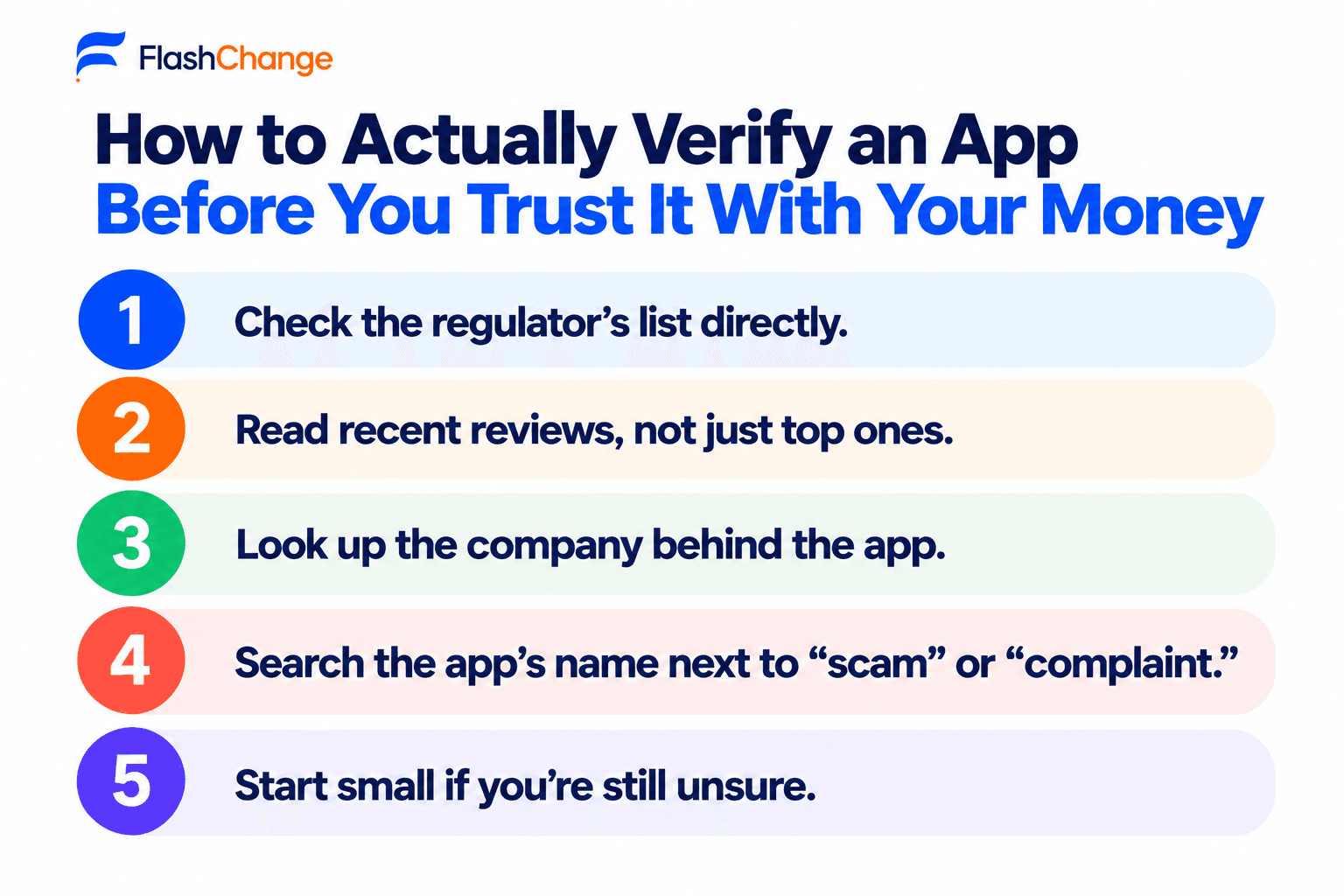
Put the checklist into practice with four quick steps.
Check the regulator's list directly. Don't take an app's word for its own licensing status. Search the CBN or SEC's published list of licensed entities yourself.
Read recent reviews, not just top ones. Reviews sorted by "most recent" tell you what's happening now. Reviews sorted by "most helpful" can be old, or curated.
Look up the company behind the app. A legitimate platform has a real registered business name and address you can find. If you can't find who actually operates the app, that's a problem on its own.
Search the app's name next to "scam" or "complaint" before you commit any money. Ten minutes of searching can save you from becoming the next data point in next year's scam report.
Start small if you're still unsure. Deposit an amount you could afford to lose, test a withdrawal, and see how the whole process actually feels before committing more. A platform with nothing to hide won't make that process difficult.
None of this takes long. It takes less time than the sign-up process itself, and it's the difference between trusting a platform because it looks good and trusting it because you actually checked.
Frequently Asked Questions
How do I know if a loan app is a scam?
Check whether it's licensed by the relevant regulator, look for hidden fees that only appear after you've committed, and search the app's name alongside "scam" or "complaint" before borrowing anything.
What should I do if a fintech app scams me?
Document everything, screenshots, transaction IDs, and communication, then report it to the relevant regulator and, if money was involved, your bank. Reporting matters even if recovery isn't guaranteed; it's also how patterns get flagged before more people are affected.
Are all Nigerian fintech apps regulated?
No. Licensing requirements exist, but not every app operating in the market is properly licensed or compliant. Checking a specific app's status directly with the regulator is the only reliable way to know.
Is a high download count a sign an app is safe?
Not on its own. Download counts measure popularity and marketing reach, not security. Some of the most downloaded fintech apps in Nigeria have also had documented security vulnerabilities.
Can I get my money back if a fintech app scams me?
Sometimes, especially if you reported quickly and the platform is a regulated entity required to handle disputes formally. Recovery is far less certain with unlicensed platforms or funds sent directly to a scammer outside any app. It's another reason the licensing check matters before you commit money, not after.
How FlashChange Measures Up Against This Checklist
We didn't write this checklist and then hope FlashChange happens to pass it. It's closer to the reverse: this is the standard we've built around internally, and it's worth being explicit about where FlashChange stands on each point.
Licensed and regulated. FlashChange operates within Nigeria's regulatory framework for digital asset services rather than around it, and that status is checkable the same way any platform's should be.
Clear fees upfront. Rates are shown before you commit to a transaction, not revealed partway through or after.
Responsive support. Support exists to answer real questions from real people, including anyone still deciding whether to use the platform at all.
Honest when something goes wrong. Outages and errors get acknowledged and explained rather than left for users to piece together on their own.
Security by design. Two-factor authentication, careful handling of customer funds, and data protection aren't treated as add-ons.
This is also where Ememobong Udofot, who leads Branding and Communications at FlashChange, has written directly about this same visibility-versus-legitimacy gap. Her point, and the reason it shaped this checklist in the first place, is that a platform shouldn't have to ask to be trusted. It should be built in a way that trust becomes the obvious conclusion.
None of the five points above are a claim to take on our word. Run FlashChange through the exact same checklist you'd run any other platform through: check the registration yourself, read recent reviews, test support before you commit money, and see how it holds up.
Conclusion
Popular and trustworthy sound like they should go together. They don't always.
The checklist here isn't complicated: licensing, clear fees, responsive support, honest handling of problems, and real security, all things you can verify yourself rather than take on faith.
Even Nigeria's regulators are treating this as unfinished work, not a solved problem, with the CBN openly targeting an 80% trust index by 2028 instead of assuming trust already exists.
Until that gap closes, the burden sits with users to check before they commit. Ten minutes of verification is a small price for the difference between a platform that's earned your trust and one that's just gotten good at asking for it.
Related articles
Crypto
The Future of Digital Finance
Digital finance is now about trust moving from institutions into infrastructure itself, and Africa is where that shift is happening fastest.
Ememobong Udofot
Sep 17, 2026
•
3 min read
Crypto
Why Crypto Still Struggles to Earn Trust in Nigeria
The real reason many Nigerians still don't trust crypto is not volatility and regulation. Find out why
Ememobong Udofot
Sep 17, 2026
•
3 min read
Crypto
Can Nigeria Become Africa's Crypto Hub? What the Data Says
Can Nigeria Become Africa's Crypto Hub in capital or infrastructure? Here's what the data says and what's still missing.
Ememobong Udofot
Sep 11, 2026
•
3 min read
Subscribe to our Newsletter
Enter your contact details to get the latest news and trends to help boost your business.