Crypto
cNGN: Nigeria’s First Regulated Stablecoin
Nov 26, 2025
•
3 mins read
Nigeria has taken a bold step in the digital finance space with the introduction of cNGN, the country’s first regulated stablecoin. Launched in 2025 under the Central Bank of Nigeria’s regulatory sandbox.
What is a cNGN?
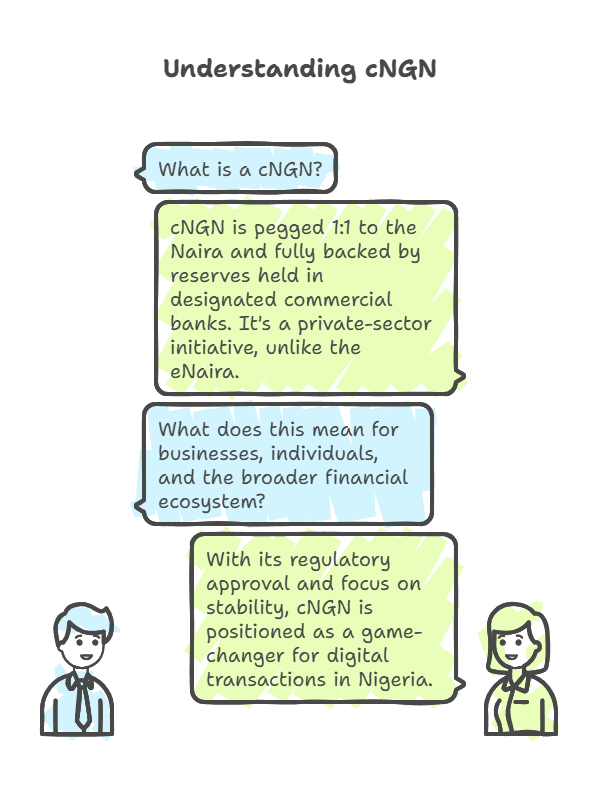
cNGN is pegged 1:1 to the Naira and fully backed by reserves held in designated commercial banks. Unlike the eNaira, which is a central bank digital currency (CBDC), cNGN is a private-sector initiative developed by the Africa Stablecoin Consortium, a coalition of Nigerian banks, fintech firms, and blockchain experts.
With its regulatory approval and focus on stability, cNGN is positioned as a game-changer for digital transactions in Nigeria. But what does this mean for businesses, individuals, and the broader financial ecosystem?
What is a Stablecoin?
A stablecoin is a type of cryptocurrency designed to maintain a stable value by being pegged to a reserve asset like the US dollar, gold, or a national currency. Unlike volatile cryptocurrencies like Bitcoin and Ethereum, stablecoins provide price stability, making them ideal for transactions and savings.
Types of Stablecoins
- Fiat-Collateralized Stablecoins: Backed by traditional currency (e.g., USDT, USDC, BUSD)
- Crypto-Collateralized Stablecoins: Backed by other cryptocurrencies (e.g., DAI)
- Algorithmic Stablecoins: Maintain stability through supply control mechanisms (e.g., UST before collapse)
Why Does Nigeria Need a Stablecoin?
Nigeria has one of the highest crypto adoption rates in the world, driven by economic instability, high remittance fees, and limited access to traditional banking. A Nigeria stablecoin can address key financial challenges by:
- Providing financial inclusion: Giving unbanked individuals access to a stable digital currency.
- Reducing transaction costs: Lowering fees associated with cross-border payments.
- Hedging against inflation: Offering Nigerians a stable asset amid naira devaluation.
Bridging the Gap in Payments and Remittances
One of the key advantages of cNGN is its potential to streamline digital payments and enhance cross-border transactions. Nigeria ranks as the eighth-largest recipient of remittances globally, with inflows reaching an estimated $20.5 billion in 2023. However, sending money to and from Nigeria has long been plagued by high fees and slow processing times. With cNGN, users could experience faster and more cost-effective transactions, making it an attractive option for remittance services and international payments.
How cNGN Compares to Other Stablecoins
cNGN is a big step forward, but it won’t replace foreign stablecoins like USDT and USDC, which people use to protect against Naira inflation and make global payments. Instead, cNGN offers a regulated option for safer, legal crypto transactions in Nigeria.
How Businesses Can Use cNGN
1. Online Payments
Businesses can accept cNGN as a reliable digital payment method without worrying about price fluctuations.
2. Cross-Border Trade
Nigerian businesses trading internationally can use cNGN for quicker, cheaper payments instead of relying on banks.
3. Money Transfers
For Nigerians abroad, cNGN makes sending money home easier and cheaper than traditional remittance services.
4. Decentralized Finance (DeFi)
DeFi platforms in Nigeria can use cNGN for lending, borrowing, and investing without exposure to foreign currency risks.
The use of crypto isn’t limited to Nigeria. Across Africa, digital currencies are revolutionizing trade, remittances, and financial inclusion. Learn more about how cryptocurrency is simplifying business in Africa.
Adoption and Future Growth of cNGN
As of February 10, 2025, about 66.1 million cNGN tokens were in circulation, but only 18 people held them. While it’s still early days, how businesses and individuals adopt cNGN in the coming months will determine its success. If widely accepted, it could set an example for other African countries and drive digital finance innovation.
Challenges and Risks
1. Government Regulations
Even though cNGN is approved now, future policies on crypto could affect its stability and growth.
2. Getting People to Use It
For cNGN to succeed, businesses and individuals must trust and adopt it as a daily payment method.
3. Competition with Banks
Traditional banks may see cNGN as a rival to their digital banking services, slowing its mainstream adoption.
Before investing or transacting with digital currencies, it's essential to understand market trends and risks. Check out this crypto research guide to make informed decisions.
Will cNGN Change Nigeria’s Crypto Landscape?
The launch of cNGN could increase competition in the domestic payment space and contribute to greater financial inclusion, allowing more Nigerians to access stable, blockchain-based transactions. However, it is unlikely to replace foreign currency-pegged stablecoins, which remain popular for hedging against Naira volatility and facilitating global transactions. Instead, cNGN is expected to coexist with existing digital assets, providing users with a regulated alternative for secure and compliant crypto transactions.
Whether you are new to crypto or looking to expand your portfolio, understanding the right platforms and strategies is crucial. Here’s a guide on how to buy, sell, and trade crypto in Nigeria to help you get started.
Frequently Asked Questions
What is cNGN?
cNGN is Nigeria's first regulated stablecoin. It is pegged 1:1 to the Nigerian Naira and is designed to provide a stable and secure digital currency for payments and transfers.
How is cNGN different from the eNaira?
cNGN is a privately developed stablecoin backed by reserves and approved under Nigeria's regulatory framework, while the eNaira is the Central Bank of Nigeria's digital currency (CBDC).
What can cNGN be used for?
cNGN can be used for online payments, cross-border transactions, money transfers, and decentralized finance (DeFi) applications.
Is cNGN a safe cryptocurrency?
cNGN is designed to maintain a stable value by being backed 1:1 by the Naira and operating within Nigeria's regulatory framework, making it a more stable digital asset than many cryptocurrencies.
Can I trade cNGN on FlashChange?
Yes. FlashChange provides a secure and reliable platform for trading cryptocurrencies and staying updated on developments in Nigeria's digital asset ecosystem, including cNGN.
Conclusion
cNGN represents a significant milestone in Nigeria’s journey toward a more inclusive and efficient digital financial system. By combining blockchain technology with regulatory oversight, it has the potential to reshape how Nigerians interact with digital assets, offering security, stability, and seamless transactions.
As adoption grows, it will be interesting to see how businesses and individuals integrate cNGN into their financial activities. Will it become a preferred choice for payments and remittances, or will it remain a niche product within Nigeria’s evolving crypto landscape? Time will tell.
Related articles
Crypto
The Future of Digital Finance
Digital finance is now about trust moving from institutions into infrastructure itself, and Africa is where that shift is happening fastest.
Ememobong Udofot
Sep 17, 2026
•
3 min read

Crypto
Why Crypto Still Struggles to Earn Trust in Nigeria
The real reason many Nigerians still don't trust crypto is not volatility and regulation. Find out why
Ememobong Udofot
Sep 17, 2026
•
3 min read
Crypto
How to Tell If a Fintech App Is Actually Trustworthy
Here's the actual checklist on how to know if a fintech app is legit from one that just looks trustworthy.
Ememobong Udofot
Sep 11, 2026
•
3 min read
Subscribe to our Newsletter
Enter your contact details to get the latest news and trends to help boost your business.